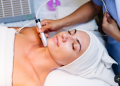
As people get older, one of the most noticeable changes in their appearance is the gradual loss of skin firmness. Fine lines, wrinkles and sagging skin can develop around the face, neck, stomach and other areas of the body as the skin’s natural support structures begin to weaken.
While surgical procedures such as facelifts and tummy tucks can address significant skin laxity, not everyone wants to undergo invasive treatment. This has contributed to growing interest in non-surgical skin tightening technologies, particularly radiofrequency treatments.
Radiofrequency uses controlled energy to heat tissue beneath the skin, encouraging biological processes associated with collagen production and tissue remodelling. But how does this technology actually work, and can it genuinely improve the appearance of loose skin?
Understanding the science behind radiofrequency provides a clearer picture of its potential benefits, limitations and effectiveness.
What causes skin to become loose and sagging?
To understand how radiofrequency works, it is important to examine why skin gradually loses its firmness.
The skin consists of several layers, including the epidermis, dermis and underlying subcutaneous tissue.
The dermis contains structural proteins that help maintain the skin’s strength, flexibility and elasticity.
Two particularly important proteins are collagen and elastin.
Collagen provides structural support, helping the skin maintain its shape and firmness. Elastin allows the skin to stretch and return towards its original position.
As people age, collagen production and organisation change, while existing fibres become increasingly fragmented.
Exposure to ultraviolet radiation, smoking, genetics and other environmental factors can accelerate these changes.
Significant weight loss can also contribute to loose skin, particularly when the skin has been stretched for several years.
As the underlying support structure weakens, the skin may begin to sag, develop wrinkles or lose its previous smooth appearance.
What is radiofrequency skin tightening?
Radiofrequency skin tightening is a cosmetic treatment that uses electromagnetic energy to generate controlled heat within the skin.
Unlike laser treatments, which use light energy, radiofrequency devices deliver electrical energy that is converted into heat as it passes through tissue.
The amount and depth of heating depend on the equipment, energy settings and electrical properties of the tissue.
The objective is to warm selected layers of the skin sufficiently to encourage collagen remodelling while avoiding excessive damage to surrounding structures.
Different radiofrequency technologies are available, including monopolar, bipolar and multipolar systems.
Some treatments deliver energy through the skin’s surface, while radiofrequency microneedling uses fine needles to deliver energy at selected depths.
Although these technologies share similar principles, their treatment methods, recovery requirements and potential risks differ.
The science of collagen contraction
One of the main reasons radiofrequency can improve skin firmness is its effect on collagen fibres.
Collagen is made up of proteins arranged into strong, organised structures that support the skin.
When collagen-containing tissue is heated sufficiently, changes can occur within the molecular bonds that maintain these structures.
This process is known as thermal denaturation.
Under controlled conditions, heating can cause collagen fibres to contract and become shorter.
This may produce an initial tightening effect in the treated tissue.
However, the degree of contraction depends on the temperature achieved, treatment duration and characteristics of the tissue.
The process must be carefully controlled because excessive heating can cause burns, scarring or unwanted tissue damage.
Immediate collagen contraction is only one part of the mechanism behind radiofrequency skin tightening.
How radiofrequency stimulates new collagen production
The longer-term effects of radiofrequency are associated with the body’s natural tissue repair processes.
When controlled heat affects the dermis, it can trigger biological responses involving specialised cells called fibroblasts.
Fibroblasts are responsible for producing collagen and other components of the extracellular matrix, which provides structural support to the skin.
Following appropriate thermal stimulation, fibroblasts may increase collagen production as part of the tissue remodelling process.
The formation of new collagen is known as neocollagenesis.
Over the following weeks and months, these changes may improve the firmness and texture of treated skin.
Scientific research has identified increases in collagen content following certain radiofrequency treatments, supporting the biological basis for their use in skin rejuvenation.
However, producing new collagen does not guarantee dramatic visible tightening, and results vary depending on the individual and technology used.
Why radiofrequency results develop gradually
Although some people notice an initial improvement in skin firmness, the more meaningful changes often take time to develop.
This is because collagen remodelling is a gradual biological process.
Fibroblasts require time to produce new collagen, while existing tissue structures undergo changes in organisation and density.
For many radiofrequency treatments, improvements may become more noticeable over several weeks or months.
Some people require a course of sessions rather than a single appointment.
The number of treatments depends on the device, treatment area, skin condition and desired outcome.
Results are not permanent because the natural ageing process continues.
Maintenance treatments may be considered, although the appropriate frequency varies and long-term evidence differs between devices.
Can radiofrequency improve facial wrinkles and sagging?
The face is one of the most common areas treated using radiofrequency technology.
As collagen and elastin change with age, fine lines may develop around the eyes and mouth, while the cheeks and jawline can gradually lose definition.
Radiofrequency treatments aim to improve the appearance of mild skin laxity by encouraging collagen remodelling beneath the surface.
People researching radiofrequency facial treatments may be interested in how this technology can address concerns such as fine lines, skin texture and early signs of sagging.
Potential treatment areas include the cheeks, jawline, forehead and selected parts of the neck.
A review of clinical evidence published in the Journal of Cosmetic Dermatology found that radiofrequency treatments can produce improvements in aspects of skin ageing, although the quality and consistency of evidence vary.
The improvements are generally more subtle than those achieved through surgical facial lifting.
For people with mild laxity who prefer a non-invasive approach, radiofrequency may be an option worth discussing with a qualified practitioner.
Can radiofrequency tighten skin on the body?
Although radiofrequency is widely associated with facial rejuvenation, the technology is also used on selected areas of the body.
Loose skin can develop around the upper arms, thighs, abdomen and other areas following ageing, pregnancy or weight changes.
The underlying principle remains similar: controlled heating encourages collagen contraction and remodelling within the treated tissue.
For people exploring body skin tightening treatments, radiofrequency may offer modest improvements in the appearance of mild skin laxity.
However, body skin can respond differently from facial skin because of variations in thickness, underlying fat and the extent of tissue stretching.
The effectiveness of treatment also depends on whether the concern is primarily loose skin, unwanted fat or a combination of both.
Radiofrequency skin tightening should not automatically be confused with radiofrequency fat reduction, as different devices and settings may target different tissue layers.
Can radiofrequency tighten loose stomach skin?
The abdomen is a particularly common area of concern for people experiencing skin laxity.
Pregnancy, substantial weight loss and natural ageing can all affect the skin around the stomach.
When the abdominal skin has been stretched for a prolonged period, its collagen and elastin structures may not return fully to their previous condition.
This can leave the stomach looking wrinkled, creased or slightly sagging.
For individuals with relatively mild skin laxity, non-surgical skin tightening for the stomach may be worth investigating.
Radiofrequency treatments aim to encourage collagen remodelling and potentially improve the appearance of the abdominal skin.
However, the distinction between mild laxity and substantial excess skin is extremely important.
Radiofrequency cannot physically remove large folds of hanging skin or reproduce the results of a surgical tummy tuck.
People who have lost considerable amounts of weight may have more excess skin than non-invasive treatments can meaningfully address.
In these circumstances, a medical assessment can help establish which options are realistic.
Does radiofrequency work on stretch marks?
Stretch marks develop when the skin stretches or changes rapidly enough to disrupt its supporting structures.
They commonly appear during pregnancy, puberty, weight gain or significant changes in body composition.
Radiofrequency treatments have been investigated for improving the appearance of stretch marks by encouraging collagen remodelling.
Some studies suggest that certain radiofrequency techniques, particularly when combined with microneedling, may improve skin texture and the appearance of stretch marks.
However, results are variable, and stretch marks cannot reliably be eliminated completely.
The age, depth and colour of the stretch marks may also influence treatment outcomes.
Is radiofrequency skin tightening painful?
The treatment experience depends on the type of radiofrequency equipment being used.
Non-invasive surface treatments generally produce a warming sensation as energy is delivered through the skin.
Some people describe the feeling as similar to a warm massage, although discomfort can increase depending on the treatment intensity and area.
Practitioners may monitor skin temperature and adjust settings to reduce the risk of overheating.
Radiofrequency microneedling is different because it involves needles penetrating the skin, often requiring topical anaesthetic and a longer recovery period.
It is important to understand which type of treatment is being offered rather than assuming all radiofrequency procedures feel the same.
What are the possible side effects?
Although radiofrequency skin tightening is generally considered less invasive than surgery, it still carries potential risks.
Common temporary reactions can include redness, warmth, mild swelling and tenderness.
These effects often settle relatively quickly following non-invasive surface treatments.
However, inappropriate energy settings, unsuitable equipment or incorrect application can cause burns, blistering, pigmentation changes and scarring.
Certain procedures may also affect underlying fatty tissue, potentially causing unwanted changes in facial or body contours.
Radiofrequency microneedling has additional risks associated with needle penetration and deeper energy delivery.
People with certain medical implants, skin conditions or other contraindications may be unsuitable for particular devices.
A professional consultation should therefore include a medical history review, an explanation of the technology and a discussion of potential complications.
How effective is radiofrequency compared with surgery?
One of the main advantages of non-invasive radiofrequency treatment is that it generally involves less recovery time than surgical skin tightening.
There are usually no surgical incisions, and many people can resume their normal activities relatively quickly.
However, the trade-off is that improvements are typically smaller.
A surgical facelift or tummy tuck can physically reposition tissue or remove substantial excess skin.
Radiofrequency cannot achieve the same degree of correction.
For people with mild to moderate skin laxity, selected treatments may provide worthwhile cosmetic improvements.
For individuals with significant hanging skin, surgery may offer a more substantial result, although it also involves greater risks and recovery requirements.
The best approach depends on the amount of loose skin, individual health, treatment goals and personal preferences.
How long do radiofrequency skin tightening results last?
The duration of results varies considerably between individuals.
Factors such as age, genetics, sun exposure, smoking, weight fluctuations and the particular treatment used can all influence how long improvements remain noticeable.
Although collagen remodelling may produce changes lasting for months or longer, radiofrequency does not stop the natural ageing process.
New wrinkles and skin laxity can continue to develop over time.
Protecting the skin from excessive ultraviolet exposure, maintaining a stable weight and avoiding smoking can help support overall skin health.
Some people choose periodic maintenance treatments, but these should be based on professional advice rather than assuming repeated procedures are always necessary.
Who is most suitable for radiofrequency skin tightening?
Radiofrequency treatments are generally most relevant to people experiencing mild skin laxity who want modest improvements without surgery.
Someone noticing early changes around the jawline, cheeks or abdomen may be a more suitable candidate than a person with substantial folds of excess skin.
Skin condition, medical history, treatment expectations and the equipment being used all influence suitability.
It is also important to distinguish between loose skin and unwanted fatty tissue, as they are different concerns requiring different approaches.
A qualified practitioner should explain what degree of improvement is realistically achievable and whether another treatment or no intervention would be more appropriate.
The future of non-surgical skin tightening
Radiofrequency technology continues to develop, with newer devices offering different approaches to controlling energy delivery and targeting selected tissue depths.
Researchers are also investigating how radiofrequency influences fibroblast activity, collagen organisation and long-term changes in skin structure.
These developments may improve treatment precision, although newer technology does not automatically guarantee better results.
The most important factor remains selecting a suitable procedure based on clinical evidence and individual needs.
Radiofrequency skin tightening is based on established biological principles involving controlled tissue heating, collagen contraction and subsequent remodelling.
For suitable individuals, these processes can produce improvements in skin firmness, texture and the appearance of mild sagging.
However, radiofrequency is not a replacement for surgical skin removal and cannot reverse every effect of ageing or substantial weight loss.
Understanding the science, potential benefits and limitations allows people to make informed decisions about whether non-surgical skin tightening is appropriate for them.